
Rowina’s Courageous Battle with Skin Cancer
A New Year, A Life Saved
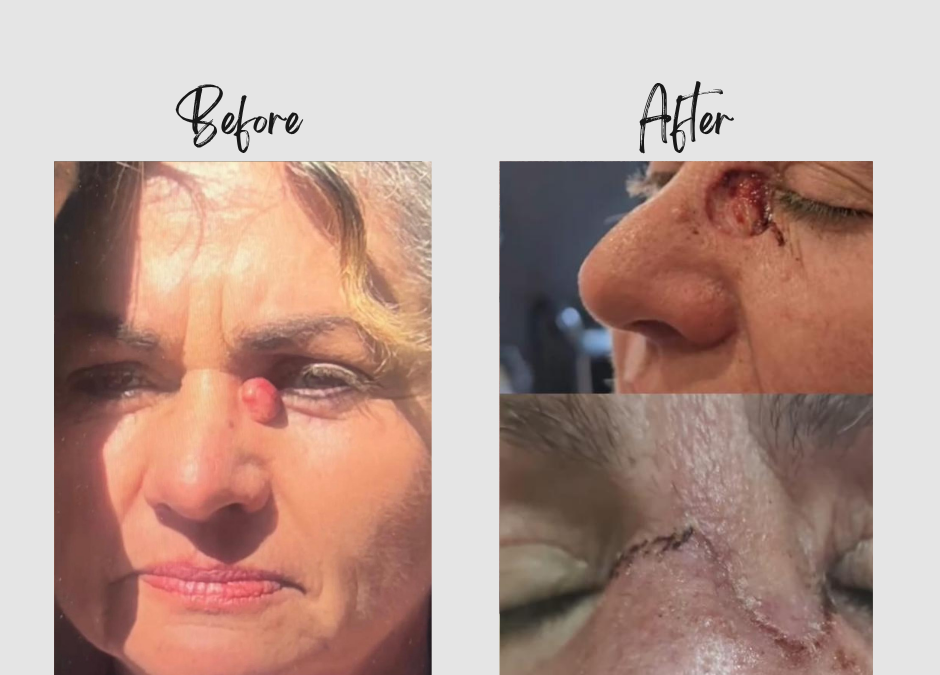
For many, January marks a fresh start. For Rowina, it marked the beginning of recovery after a life-altering diagnosis. When she came to the Dr. Ansua Foundation earlier this year, she was facing a reality that too many South Africans know all too well: skin cancer, quietly caused by years of sun exposure, had developed on her nose.
Skin cancer often doesn’t arrive with dramatic warning signs. It builds over time, a product of harsh UV rays and unprotected skin. In Rowina’s case, it took root in one of the most exposed and sensitive areas of the body — her face. Understandably, fear and uncertainty followed. But so did hope.
Precision Surgery with Compassion
Dr. Ansua Steyn and the Foundation’s surgical team responded swiftly. With clinical precision and deep empathy, they removed the cancerous cells and reconstructed the area using a highly specialized flap procedure. This technique doesn’t just close a wound — it rebuilds contours, preserves function, and restores natural appearance as much as possible.
Facial reconstructive surgery requires more than skill; it demands careful planning and artistic finesse. The outcome for Rowina was a success. The cancer was removed. Her nose was reconstructed. And her journey toward healing began.
Today, Rowina is recovering well — a testament to what is possible when access to expert care meets a patient’s courage.
Understanding the Risk of Skin Cancer in South Africa
Skin cancer remains one of the most common and under-discussed health threats in South Africa, especially for individuals exposed to high levels of UV radiation year-round. Prolonged sun exposure, particularly without sun protection, can quietly lead to basal cell carcinoma, squamous cell carcinoma, or the more aggressive melanoma.
At the Dr. Ansua Foundation, we’ve seen first-hand the toll this preventable disease can take – and how timely surgical care can save lives.
Five Smart Ways to Stay Sun-Safe in South Africa
To reduce your risk of developing skin cancer, consider adopting these daily habits:
1. Use Sunscreen Every Day
Apply broad-spectrum SPF 30 or higher to all exposed skin, especially your face, neck, and hands — even on cloudy days.
2. Avoid Peak UV Hours
The sun is most intense between 10 AM and 3 PM. If possible, seek shade or plan outdoor activities in the early morning or late afternoon.
3. Wear Protective Clothing
Opt for long sleeves, wide-brimmed hats, and UV-protective sunglasses. Modern fabrics offer breathable options for hot climates.
4. Don’t Rely on Shade Alone
Even under an umbrella or tree, UV rays can reflect off surfaces like water, sand, and concrete. Combine shade with sunscreen and protective gear.
5. Check Your Skin Regularly
Early detection is key. Look out for new moles or changes in existing ones — especially anything irregular in shape, colour, or size. When in doubt, consult a medical professional.
More Than a Procedure - A Renewed Life
Rowina’s story highlights what the Dr. Ansua Foundation stands for: access to surgical care that restores not just health, but confidence and peace of mind. For every patient we serve, we carry the belief that healing should never be out of reach.
We celebrate Rowina’s bravery, wish her a full recovery, and continue to advocate for prevention through awareness. In a country with such abundant sun, let’s also be mindful of its hidden risks.
Join Us in Changing Lives
Each successful procedure at the Foundation is made possible by the kindness of donors, volunteers, and partners. If you’d like to support our mission and help more individuals like Rowina access the care they need, visit www.ansua.co.za to get involved.
Sun safety saves lives. Surgical care restores them.